Smarty Pints
Smarty Pints is a celebration of science and beer!
Usually the third Monday of every month, 6:30pm. Clever people tell us about their work. Sometimes scientists, sometimes engineers, sometimes artists!
Are you a clever person who would like to present a 30 minute talk on what you do? Reach out at smartypints@burkegilmanbrewing.com.
Check out previous Smarty Pints topics here.
Upcoming Smarty Pints Topics
September 21
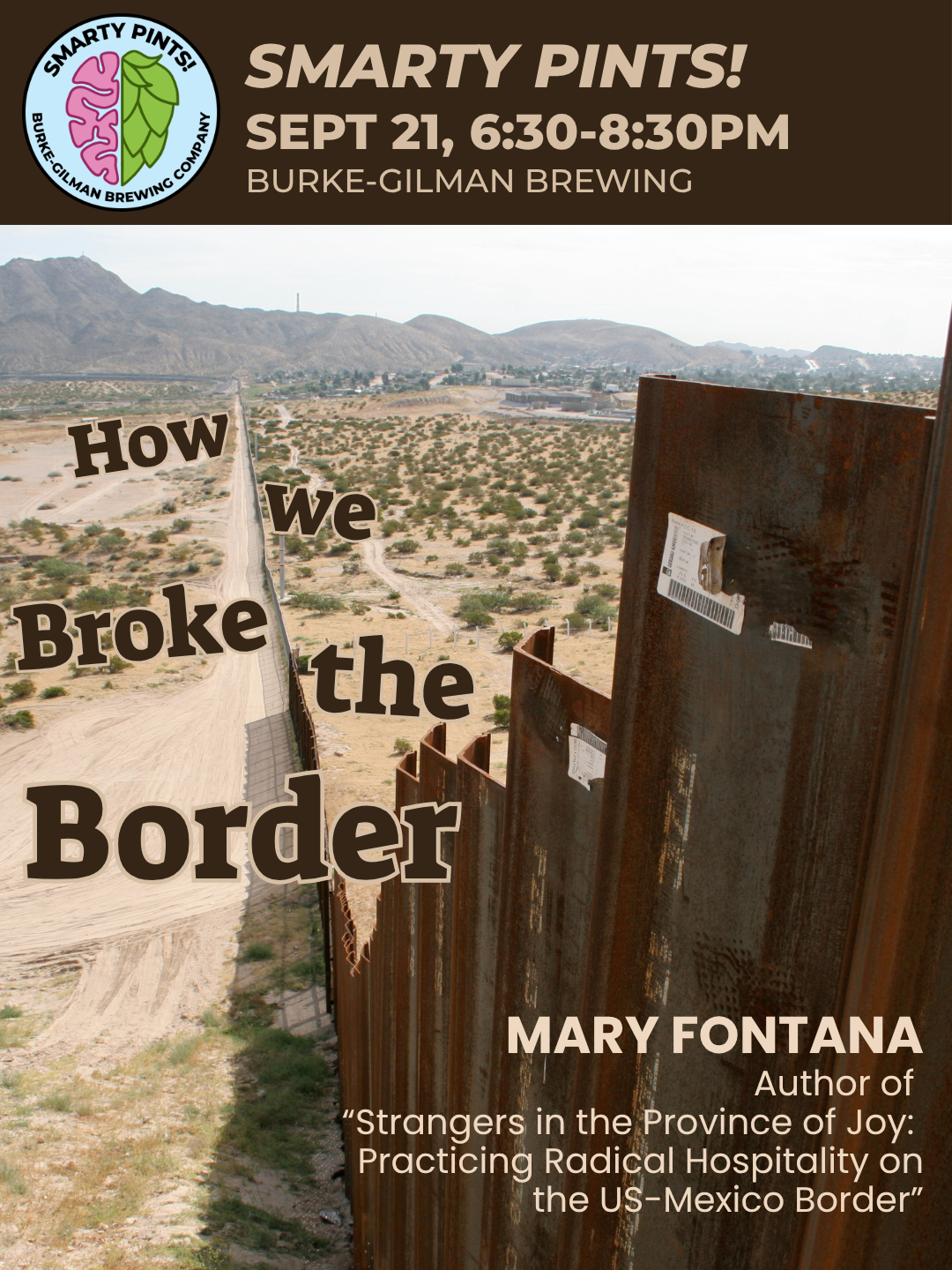
Mary Fontana
Author, "Strangers in the Province of Joy: Practicing Radical Hospitality on the US–Mexico Border"
“How We Broke the Border”
Immigration is a polarizing issue today–but sixty years ago, the concept of "illegal immigration" didn't even exist. Join local author Mary Fontana for a guided tour of US immigration history, illustrated by personal stories from her work with a migrant hospitality house on the US-Mexico border. We'll trace the origins of our militarized border and its current dysfunction, and end with policy solutions that could make our immigration system more efficient, economically sound, and humane.
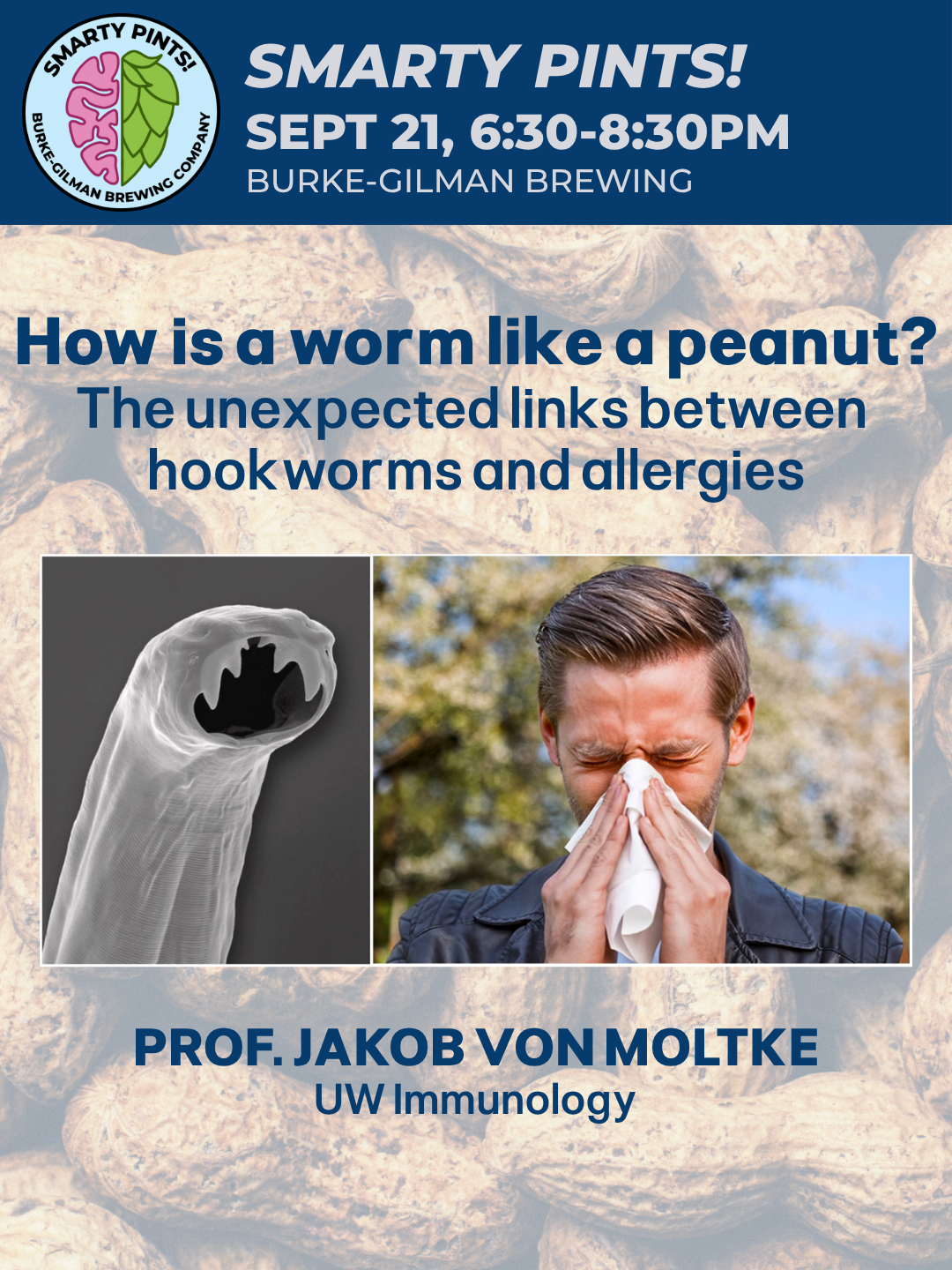
Prof. Jakob von Moltke
UW Immunology
“How is a worm like a peanut?”
It may not seem that a parasitic worm and a common allergen (like peanuts) have anything in common, but it turns out our immune system can't tell the difference. The immune response that evolved to protect us from worm infections is also the response that makes us suffer from allergies. UW Associate Professor Jakob von Moltke will discuss the work that his lab is doing to understand how our immune system first detects worms and allergens and how studying this process could eventually help to prevent allergies.
October 19
Prof. Karen Levy
UW Environmental & Occupational Health Sciences
“Water and sanitation”
Ellen Kuwana
Principal Science Writer/Editor, Kuwana Consulting, LLC
“AI environmental concerns and ethical considerations”
November 16
Alyssa Sargent
PhD candidate, UW Biology/Burke Museum
“Mighty and tiny: the territorial world of hummingbirds”
Jim Keany
Wildlife ecologist
“Biodiversity of Madagascar”
December 14
Nora Lee
PhD student, UW Biology/Burke Museum
“Hummingbird coloration and behavior”